
I was talking to my friend about the gestalt moment of science each of us had. We both were somewhat interested in religion. We were mainly into Christianity because I was in such culture in the US. He was in such culture in Singapore. Then when I was in my mid 30’s I read Richard Feynmen’s book, Surely, You’re Joking, Mr. Feynman! which profoundly shifted my world view. I stopped believing everything I read or everything someone told me. My friend told me that for him, it was Neil deGrasse Tyson whom he discovered when he was a college student. For both of us, it was the same theme: Truth depends on how you see the subject, but there are truth that is the same no matter how you see it. Like most of living thing are born and they eventually die.
I thought of our conversation and did a search on YouTube on Neil deGrasse Tyson. I found this program, What Really Happens When We Die? with Venki Ramakrishnan, on deGrasse Tyson’s channel, StarTalk.
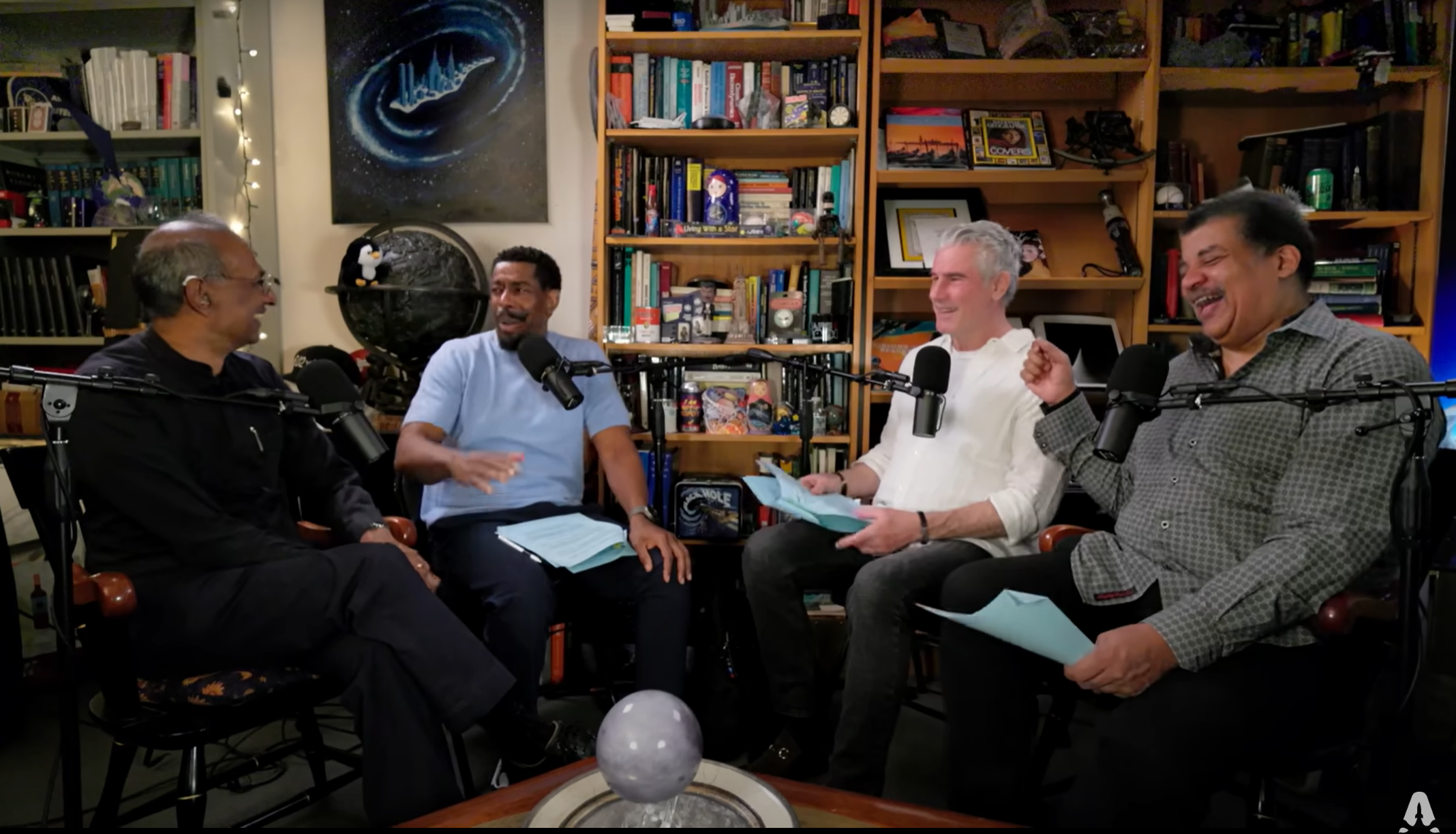
Watching it, I immediately felt at home, nostalgic because the show was so American. Where else in the world that big deal scientists make so many goofy remarks, laugh so loudly at their own and other people’s jokes? I thought of Richard Feynmen. He was seen as such a goof, but he seemed so approachable.
While watching the program, I was taking so many notes, not about what happens when we die, but on fascinating topics like Greenland shark that lives to be 700 years old and jellyfish that never dies. And how Venki Ramakrishnan started getting creepy calls from wealthy individuals who wanted to live forever.
For many years, I was thinking of how to die when I felt was time without being nuisance to my family or to people who had to handle my dead body. That has been resolved about 3 years ago when I learned of Indian practice of gradually withering away in about 10 days by fasting. It’s fascinating when I tried doing more research on this topic, I get a warning that it’s an unsafe practice. AI only knows how to provide information based on what people said on Internet before. It is so biased towards current medical practice and pharmaceuticals research papers, as they dominate the healthcare scene. I guess what biases Internet information now are pharmaceutical dominated medical practice, religion and made up beliefs by individuals. I wouldn’t call it fake news, because to the individuals posting on Internet, it’s their truth. Like I said at the start, truth depends on how each of us view the subject.
Let me just conclude by saying that I just love the kind of insight I gain from watching geeky science shows like StarTalk. Laughter, lightheartedness, theory based on vigorous experiments, geeky topics. Thank you, Neil deGrasse Tyson and friends!
 FUJIKO SUDA